

Mary
Carillo
- Biography
- Career Highlights
- Majors
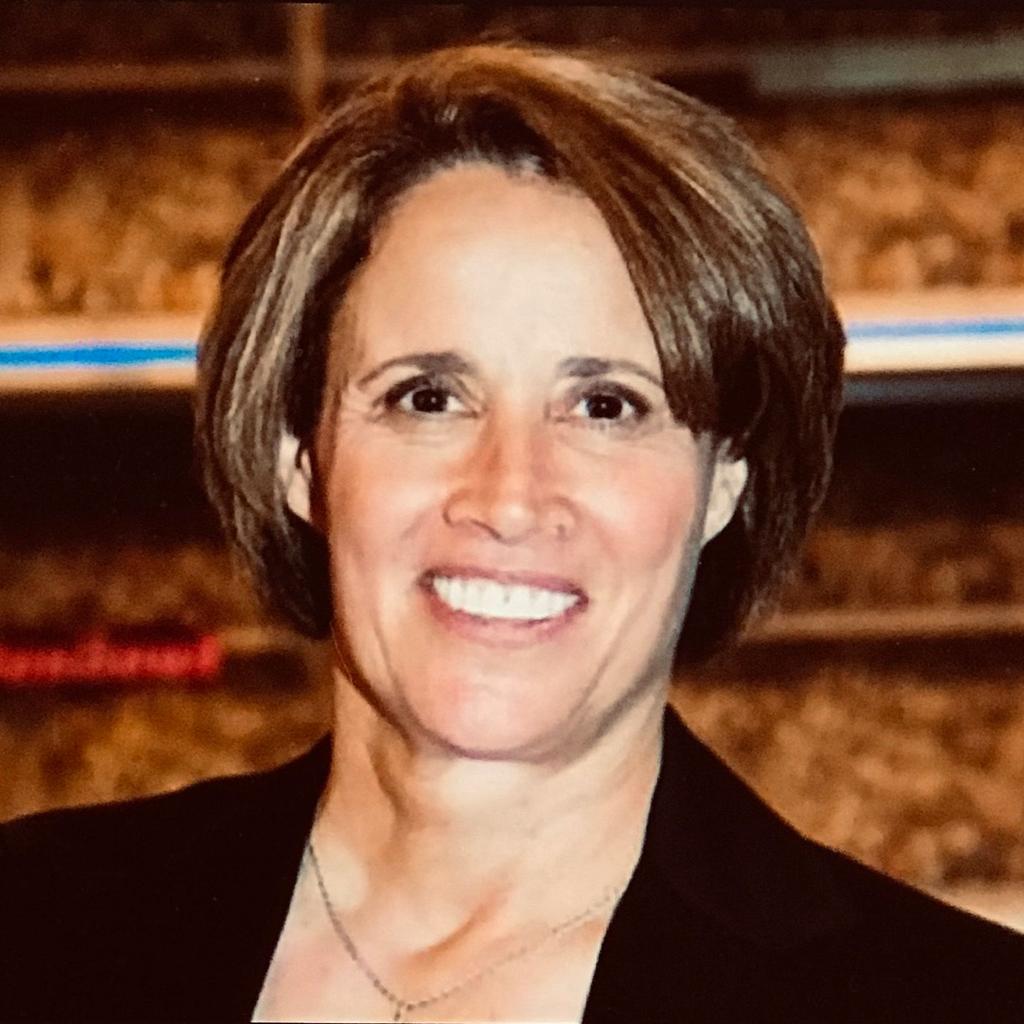
There’s only one person on the planet who has won both a major tennis title and the most prestigious award in broadcast journalism. Her name is Mary Carillo, a 2026 International Tennis Hall of Fame inductee in the Contributor category.
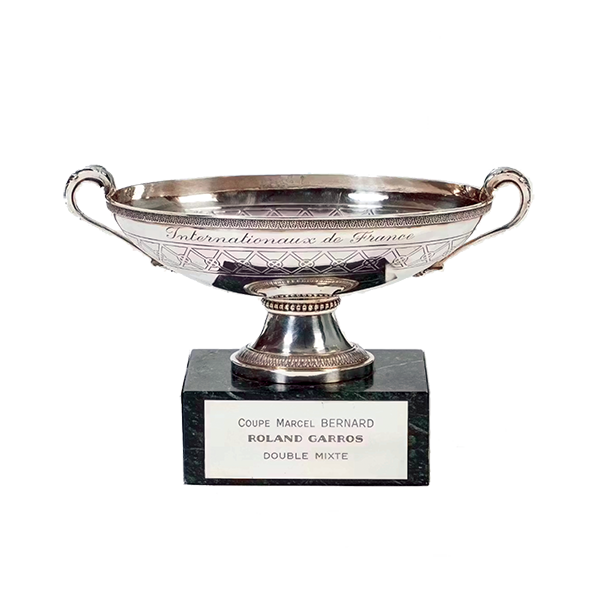
In 1977, alongside childhood friend John McEnroe, Carillo won the mixed doubles title at Roland-Garros. In 1999, by then one of the world’s most prominent broadcast journalists, Carillo won the first of three Peabody Awards for co-writing the HBO Sports documentary, Dare to Compete: The Struggle of Women in Sports.
Severe knee injuries put an end to Carillo’s on-court tennis journey, her short pro career ending in 1980. In the nearly half-century since, her contribution to the sport as a broadcast journalist has been both epic and transcendent.
To be sure, prior to Carillo, other female tennis players had made their mark as television commentators. These include her fellow members of the International Tennis Hall of Fame, Ann Haydon Jones, Virginia Wade, and Julie Heldman. Building off the ground broken by these and other notable predecessors, Carillo blossomed into a titan, her portfolio of employers eventually including CBS, NBC, ESPN, HBO, MSG Network, PBS, Tennis Channel, Turner Sports, USA Network, and the USTA.
Devoted as Carillo was to tennis throughout her youth, deep within her bones bubbled the soul and sensibility of a brilliant storyteller. Born on March 15, 1957, Carillo grew up in Douglaston, New York, a comfortable suburban community located just inside the northeastern part of the New York City borough of Queens. Tennis entered the picture when the nine-year-old Carillo won a tennis racquet at a fishing contest and a year later decided to give the sport a shot. Swiftly, she was hooked. Aiding Carillo’s growth was the presence of a young boy two years younger than her who lived a few blocks away, a fellow lefthander named John McEnroe. The two learned the game together, playing each other hundreds of times. In time, both would practice at nearby Port Washington Tennis Academy, where the man in charge was the legendary Australian coach and future member of the International Tennis Hall of Fame, Harry Hopman.
By the time she was 18, in 1975, Carillo had emerged as the tenth-ranked junior in America. Turning pro in 1977, Carillo attained a career-high singles ranking of 33 in the world in 1980. But by then, several years of longstanding knee problems had only gotten worse. Following a first-round loss at Wimbledon in 1980, Carillo knew she would need to earn a livelihood away from world-class competition.
Throughout that entire time, though, as she had focused deeply on building tennis skills, Carillo had come of age in a time and place greatly flavored by communication and connection. The Carillo household was the kind of home where dinner table conversation sparkled with wit and warmth. Mary’s older brother, Charlie, became a prominent journalist and novelist. Her younger sister, Gina, commenced an acting career. Her father, Tony, was an accomplished art director at Young & Rubicam, one of the world’s leading advertising agencies. And it was impossible not to engage in friendly dialogue with Mary’s mother, Terry. Everything from Charlie’s penchant for literature to Tony’s storyboards for advertisements to Terry’s voracious intellect to Gina’s lively manner, as well as Mary’s naturally curious persona, fueled her ability to speak eloquently about tennis with insight and humor. These qualities made Carillo a favorite among journalists when she was a player.
A foreshadowing of the future had come in early 1980. While attending the WTA’s season-ending tournament at Madison Square Garden (played then in March), Carillo was given the chance to talk about tennis on-air. A classic movie title sums up what happened that evening: A Star is Born. For a few years, Carillo juggled broadcasting and work as an instructor at Hopman’s Florida-based tennis facility. She also took on various writing projects, including stories for World Tennis Magazine and collaborating on two books: Tennis My Way by Martina Navratilova and Rick Elstein’s Tennis Kinetics with Navratilova and Rick Elstein.
Soon enough, Carillo became a full-time broadcaster for a wide range of media outlets, initially for the likes of MSG Network, USA Network, CBS, and ESPN. There followed more opportunities, including, since 1992, an ongoing role covering the Olympics for NBC and, starting in 1997, 26 years as a correspondent for HBO’s magazine show, Real Sports with Bryant Gumbel. Carillo has earned six Sports Emmys and was inducted into the Sports Broadcasting Hall of Fame in 2018. Her documentaries include Billie Jean King: Portrait of a Pioneer (2006)—which earned her a Peabody Award—and McEnroe/Borg: Fire & Ice (2011), a look at the John McEnroe-Björn Borg rivalry.
Thoughtful, clever, and smooth as Carillo is, beneath all that verbal aptitude lies a strong work ethic, inspired by everything from her father’s devotion to his craft to the Australian tennis legends she idolized as a child and later practiced with as a pro. Anyone seeking a career in broadcast journalism should study how Carillo prepares, whether for a match at any tournament, a Real Sports feature on a tricky issue, or a lengthy series of documentary interviews. Pens, pencils, highlighters, scissors, and more tools all come into play as she combs through articles and transcripts, organizing them into her notebooks. Carillo also maintains frequent contact with a wide range of sources – players, coaches, agents, journalists, producers, equipment reps, and more.
The same capacity for hard work and relentless engagement that made Carillo an excellent tennis player has made her a magical journalist. For all of that, our entire sport and millions of viewers are significantly richer.
--written by Joel Drucker, ITHF historian-at-large
Notable Highlights
- Winner of six Emmys and three Peabody Awards (the Peabody is the broadcasting world’s highest honor, equivalent to the Pulitzer Prize)
- Co-author of three books: Tennis My Way (Martina Navratilova with Mary Carillo, 1984), Rick Elstein’s Tennis Kinetics (with Navratilova, Elstein, Carillo, 1985), and Tennis Confidential II: More of Today's Greatest Players, Matches, and Controversies (with Paul Fein, 2008)
- Inducted into the Sports Broadcasting Hall of Fame in 2018
- Reached a career-high singles ranking of No. 33 (‘80) and won the 1977 Roland-Garros mixed doubles title (with John McEnroe)
- Three-time co-host of the Westminster Kennel Club Dog Show (2009, 2013, 2016)
- Host of the National Dog Show (2022 to present)
- Named Best Commentator by Tennis Magazine (1988-91)
- WTA Broadcaster of the Year (1981 and 1985)
- Played on the WTA tour 1977-1980
- Won the 1977 Roland-Garros Mixed Doubles Championship (with John McEnroe)
- Winner of six Emmys and three Peabody Awards
- WTA Broadcaster of the Year (1981 and 1985)
- Tennis Magazine's "Best Commentator" (1988-91)